
Sound

CHAPTER SOUND
3
0

Welcome to the fascinating world of sound! These  objectives are related to Chapter Sound of Science Fact File Book 2

Have you ever wondered how your favorite song travels from the speakers to your ears, or why some noises are louder than others?

Sound is all around us, shaping our experiences and adding richness to our lives.

In this article, we’ll embark on an exciting journey to explore the wonders of sound, uncovering its mysteries one vibration at a time.

Get ready to dive into the rhythm of sound waves and discover the secrets behind the music of the universe!


Few important terms definitions:-

Few important terms definitions which are related to Chapter Sound are as follows.

  1. Sound:

Sound is a form of energy that travels through air, water, or solids in the form of vibrations that can be heard by our ears.


  1. Sound Waves:

Sound waves are the vibrations that travel through a medium (like air, water, or solids) and carry sound energy.


  1. Frequency:

Frequency refers to how often something happens in a given time. In sound, it describes how many waves pass by in one second and is measured in Hertz (Hz).


  1. Pitch:

Pitch is how high or low a sound is. Sounds with high frequencies have high pitches, like a bird chirping, while sounds with low frequencies have low pitches, like a deep rumble.
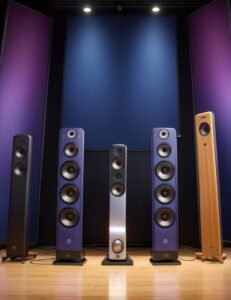
speakers for pitch and frequency

  1. Loudness:

Loudness is how strong or intense a sound is. It’s determined by the amplitude of the sound wave, which is how high the peaks and low the troughs of the wave are.


  1. Amplitude:

Amplitude is the measure of the height of a sound wave. A higher amplitude means a louder sound.


  1. Hertz (Hz):

Hertz is the unit used to measure frequency. One Hertz equals one cycle per second.


  1. Decibels (dB):

Decibels are used to measure the loudness of sound. It’s a unit that compares the intensity of one sound to another. The higher the decibel level, the louder the sound.


  1. Soundproofing Material:

Soundproofing materials are used to block or reduce the transmission of sound from one area to another. They absorb or reflect sound waves to minimize noise.


  1. Wavelength:

Wavelength is the distance between two consecutive peaks or troughs of a sound wave. It determines the pitch of the sound.


  1. Longitudinal Waves:

Longitudinal waves are waves where the particles of the medium move parallel to the direction of the wave. Sound waves are longitudinal waves.


  1. Transverse Waves:

Transverse waves are waves where the particles of the medium move perpendicular to the direction of the wave. Light waves are transverse waves.


  1. Resonance:

Resonance occurs when an object vibrates at its natural frequency in response to another vibrating object, amplifying the sound.


  1. Infrasonic:

Infrasonic refers to sound waves with frequencies below the range of human hearing, typically below 20 Hz.


  1. Ultrasonic:

Ultrasonic refers to sound waves with frequencies above the range of human hearing, typically above 20,000 Hz.

 

sound quizzes 

Quizzes about Chapter sound:

You can learn more about chapter sound by answering these quizzes.

SOUND Quiz 1

1 / 30

Category: SOUND

1. Unit of frequency for sound waves?

2 / 30

Category: SOUND

2. Animal known for exceptional hearing?

3 / 30

Category: SOUND

3. What is the range of human hearing in Hertz?

4 / 30

Category: SOUND

4. How does sound travel through a vacuum?

5 / 30

Category: SOUND

5. What is the unit of measurement for the frequency of sound waves?

6 / 30

Category: SOUND

6. What part of the ear translates sound vibrations into electrical signals for the brain?

7 / 30

Category: SOUND

7. Which material is a good conductor of sound?

8 / 30

Category: SOUND

8. Which musical instrument is known for using air columns to produce sound?

9 / 30

Category: SOUND

9. Instrument with vibrating reeds?

10 / 30

Category: SOUND

10. Device to measure sound intensity?

11 / 30

Category: SOUND

11. Unit of measurement for sound?

12 / 30

Category: SOUND

12. Which of the following is an example of a percussion instrument?

13 / 30

Category: SOUND

13. What is the purpose of the tiny hairs in the inner ear?

14 / 30

Category: SOUND

14. What part of the ear collects sound waves?

15 / 30

Category: SOUND

15. What is the unit of power for sound waves?

16 / 30

Category: SOUND

16. What causes the sensation of sound in the human ear?

17 / 30

Category: SOUND

17. Outer ear's primary purpose?

18 / 30

Category: SOUND

18. What property of sound determines loudness?

19 / 30

Category: SOUND

19. Material for absorbing sound waves?

20 / 30

Category: SOUND

20. What is the term for the distance between one peak of a sound wave and the next?

21 / 30

Category: SOUND

21. Term for highness or lowness of a sound?

22 / 30

Category: SOUND

22. In which medium does sound travel the fastest?

23 / 30

Category: SOUND

23. What is the source of sound in a guitar?

24 / 30

Category: SOUND

24. What is the term for a sound that is unpleasant to the ear?

25 / 30

Category: SOUND

25. What is the term for the highest point of a sound wave?

26 / 30

Category: SOUND

26. Speed of sound in air at room temperature?

27 / 30

Category: SOUND

27. In which medium does sound travel the slowest?

28 / 30

Category: SOUND

28. Which of the following animals does not use echolocation?

29 / 30

Category: SOUND

29. Which gas is commonly used to transmit sound in cartoons?

30 / 30

Category: SOUND

30. Bouncing back of sound waves?

Your score is

The average score is 35%

0%


SOUND QUIZ 2

1 / 25

1. What is the frequency range of ultrasonic waves?

2 / 25

2. Which is not a form of energy?

3 / 25

3. What is the unit of measurement for the loudness of sound?

4 / 25

4. In which part of the ear are the semicircular canals located?

5 / 25

5. What is the term for the persistence of sound after the source stops producing it?

6 / 25

6. What is the minimum number of compressions and rarefactions needed for one complete cycle of a sound wave?

7 / 25

7. What is the term for the perceived highness or lowness of a sound?

8 / 25

8. What part of the ear is responsible for detecting changes in head position?

9 / 25

9. Which type of waves are used in sonar to detect underwater objects?

10 / 25

10. In which medium does sound travel at a constant speed regardless of frequency?

11 / 25

11. What property of a sound wave is associated with its quality or color?

12 / 25

12. Which type of waves are used in medical ultrasound imaging?

13 / 25

13. What is the primary function of the ear's hammer, anvil, and stirrup?

14 / 25

14. Which of the following materials is a good insulator of sound?

15 / 25

15. What is the primary function of the pinna (external ear)?

16 / 25

16. Which property of a sound wave determines its pitch?

17 / 25

17. What is the term for the interference of sound waves resulting in a louder sound?

18 / 25

18. Which part of the ear helps in localizing the direction of a sound source?

19 / 25

19. What is the speed of sound in water?

20 / 25

20. Which animal is known for producing infrasound for communication?

21 / 25

21. Which musical instrument produces sound by vibrating a column of air in a pipe?

22 / 25

22. What part of the ear is responsible for converting sound vibrations into nerve impulses?

23 / 25

23. What is the medical term for the ringing sound in the ears?

24 / 25

24. Which animal is known for producing ultrasound for communication?

25 / 25

25. Which type of wave is a sound wave?

Your score is

The average score is 40%

0%


SOUND QUIZ 3

1 / 25

Category: SOUND

1. ___________ is the distance between two compressions or rarefactions.

2 / 25

Category: SOUND

2. Bats and dogs can detect _________.

3 / 25

Category: SOUND

3. A sound meter converts _________ energy into electrical energy.

4 / 25

Category: SOUND

4. The relationship between the speed, frequency, and wavelength of a sound can be shown by the equation:______.

5 / 25

Category: SOUND

5. Sound with a high frequency have a _______ pitch.

6 / 25

Category: SOUND

6. Noise is measured in __________.

7 / 25

Category: SOUND

7. Noise levels can be measured with a ___________.

8 / 25

Category: SOUND

8. Loudness of a sound can be measured in ___________.

9 / 25

Category: SOUND

9. The Human ear is able to detect sound in a range _________.

10 / 25

Category: SOUND

10. The ___________ of a sound is the number of sound vibrations set up in 1 second.

11 / 25

Category: SOUND

11. In a __________, it is a string which vibrates.

12 / 25

Category: SOUND

12. A _________  is a regular backward and forward movement.

13 / 25

Category: SOUND

13. Pitch of a sound is measured in ________.

14 / 25

Category: SOUND

14. ___________ is used in Hospitals for breaking down kidney stones.

15 / 25

Category: SOUND

15. Sound waves are ___________ waves.

16 / 25

Category: SOUND

16. __________ can be detected by whales, elephants, and rhinoceroses.

17 / 25

Category: SOUND

17. Sound waves take about ___ seconds to travel one kilometer.

18 / 25

Category: SOUND

18. _____________ is used for monitoring earthquakes and studying rock information.

19 / 25

Category: SOUND

19. Sounds above 20.000Hz are called __________.

20 / 25

Category: SOUND

20. Too much noise causes _________ pollution.

21 / 25

Category: SOUND

21. Sound below _____ are called infrasound.

22 / 25

Category: SOUND

22. __________ can only move when there is material to move through.

23 / 25

Category: SOUND

23. Sound is made when something _______.

24 / 25

Category: SOUND

24. The loudness of a sound depends on the height of the sound waves __________.

25 / 25

Category: SOUND

25. Sound cannot travel through a __________.

Your score is

The average score is 64%

0%


You can also download the objectives:

Click Here

You can also download the questions and answers:

Click here

1 comment

comments user
Hashir

Uwuwuwuuwuwuwww

Post Comment